Kidd retrieves Johanna from the Leonberger farm
News of the WorldKidd retrieves Johanna from the Leonberger farm when he finds her sent into a field after dark to fetch horses, carrying a heavy load and bearing marks from a dog whip. The encounter turns the planned reunion with her relatives into a decisive departure: Johanna runs to Jefferson Kyle Kidd, calls him her grandfather, and chooses to leave with him. His return north with her begins a renewed journey together and makes visible the difference between being returned to family by name and being cared for in practice.
The return to the farm
The morning after staying in San Antonio, Texas, Kidd drives down the Castroville Road with Pasha tied behind the Curative Waters wagon. He has no settled account of what he will say to Anna Leonberger and Wilhelm Leonberger. He considers the possibility that they need information—or simply the ability to imagine what it means for a child to be taken captive, redeemed, and then adopted by people who were strangers. His own thoughts turn accusatory: he regards the couple as coldhearted and miserly, but still means to try reason or bribery before continuing north.
By nightfall he has reached D’Hanis and turned onto the road to the Leonberger farm. He does not know whether Johanna’s relatives will be glad to be rid of her, and he doubts she can do the work they expect of her. He even fears that severe beatings may be part of her treatment, though at this point that is his apprehension, not something he has witnessed. Near the farm, he stops beside mesquite trees. A light shines in the farmhouse window; he sits quietly, knuckles beneath his nose, thinking before he acts.
Johanna in the field
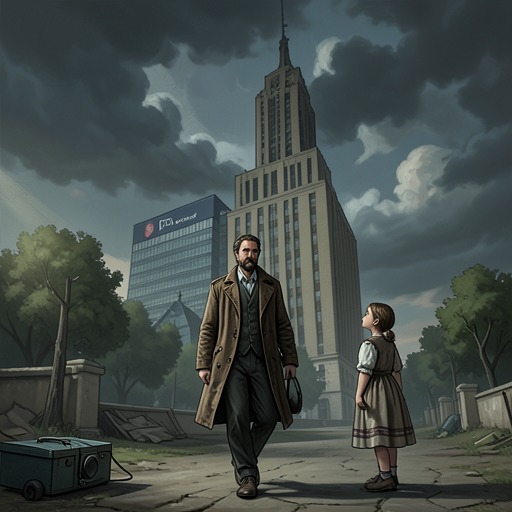
Kidd then sees Johanna alone on the flat, grassy field. She is only ten, out after dark to fetch horses, with several heavy leather halters over her shoulder and a wooden bucket of shelled corn in both hands. The load makes her stumble over the uneven ground. She calls to the horses softly in Kiowa, while her ragged, taffy-colored hair blows loose around her shoulders. The scene’s details make her situation concrete: she is not simply back among relatives, but alone in an unfamiliar landscape, doing difficult work at night.
Kidd calls her name. Johanna turns and stares at the wagon, Pasha, and the man on the seat. The grass hisses around her skirt, and she is still wearing the same dress; no bath or change of clothes has been offered. Rather than approach him directly, she offers Pasha a handful of corn, saying, “Oh, Pasha want to eat! Allite? I giff Pasha, allite?” The gesture makes the horse a pretext for approaching Kidd—and for making herself seem welcome and wanted. Her words and cautious maneuver show how urgently she is trying to secure a place beside him.
When Kidd sees dark red stripes across her forearms and hands, he recognizes them as marks from a dog whip. Anger nearly freezes him and threatens to stop him from acting. He nevertheless speaks calmly, telling her it is all right and asking her to leave the bucket. The contrast between his contained voice and his anger matters: his first response is not to frighten her further, but to make departure possible.
Crossing the fence
Kidd wraps the reins around the driver’s post and steps down. Johanna drops the bucket, runs to the fence, grips its top rail, and vaults over into the road, landing on her feet. She does not wait for Kidd to lift her or carry her across. The physical action gives her choice a clear form: she abandons the task imposed on her and crosses the barrier between the field and the road on her own.
She addresses Kidd as “Kontah,” meaning grandfather, and says, “I go with you.” Then she begins to cry and repeats that she is going with him. Her words name the relationship she claims with him, while her movement and tears convey the urgency of the decision. Kidd puts an arm around her, takes the halters, and hurls them into the dirt. The abandoned equipment marks the end of the work that had kept her in the field; he does not pause to retrieve it or resume the proposed negotiation with her relatives.
Departure and renewed journey
Kidd turns the Curative Waters wagon north. His parting answer to any possible objection is a threat to shoot the objectors full of ten-cent pieces, invoking the loaded shells associated with his travels. The line is bravado, but the action behind it is plain: he has chosen to take Johanna with him rather than leave her at the farm. The return to the road is therefore not a successful handover to her relatives, but a reversal of that arrangement.
Afterward, Kidd and Johanna travel north again, from San Antonio, Texas, toward Wichita Falls, Texas, Bowie, and Fort Belknap, at times in convoy with freighters or the Army. Their roles become familiar to people along the route: he is the man who reads the news, and she is the captive girl he rescued. Stories circulate about her, including a sensational account of her attacking Almay with a bag of quarters. Away from that public legend, their everyday life is quieter. In winter they eat at the back table of eating houses while Johanna bends over a book and prints letters on the reverse of one of Kidd’s handbills with a carpenter’s pencil. He patiently guides her through the alphabet. The rescue thus continues not only as a dramatic escape from the farm, but as a return to shared travel and the patient work of learning.